
sX OS Components
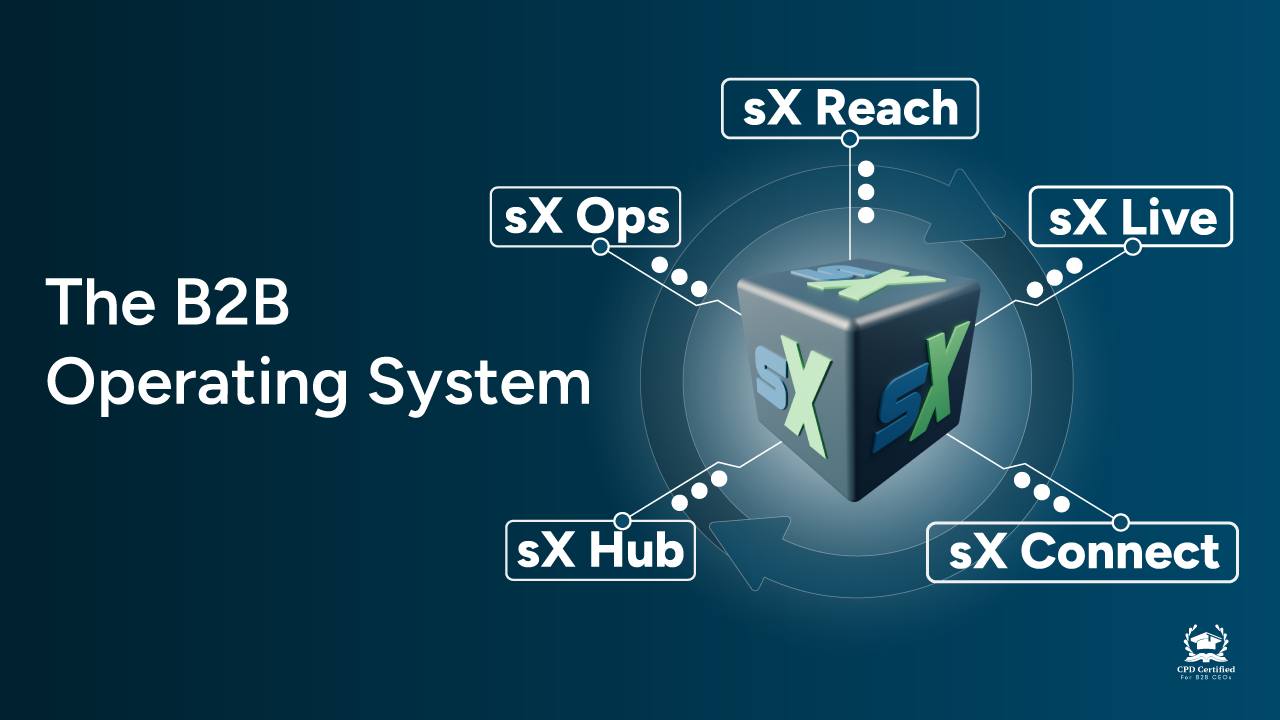
sX OS is made up of connected components that support how modern B2B growth actually works.
Each component has a clear job: create visibility, build authority, convert interest, manage operations, and measure commercial outcomes. Together, they turn B2B GTM transformation into a practical operating environment.
Five Connected Components. One B2B Operating Environment.
Most B2B firms already have tools. What they do not have is a coherent operating structure.
sX OS brings the main parts of modern GTM together so the business can move from disconnected activity to managed execution.
The goal is not to replace every tool a company already uses. The goal is to connect the work that matters: market visibility, content, buyer engagement, workflow, data, and decision-making.
sX Reach
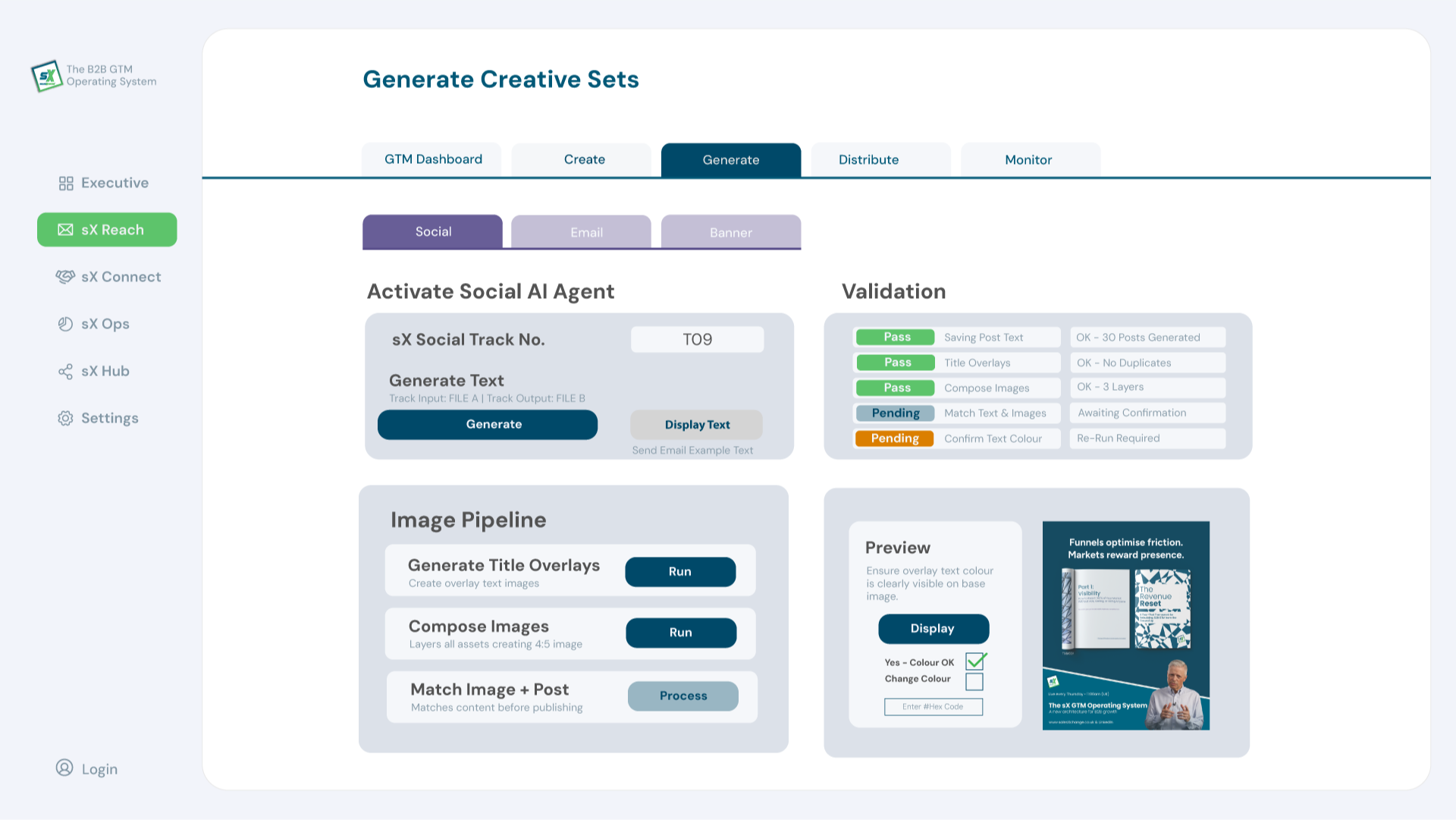
Market visibility across your Total Addressable Market
sX Reach supports the exposure layer of the system: It helps the business plan, organise, and distribute market-facing activity across channels such as social, email, open-access content, and campaign assets.
The purpose is simple: make the business consistently visible to the market it wants to win.
This is where old lead-gen thinking starts to change. Instead of only chasing hand-raisers, the business builds repeated exposure across its target market.
sX Live
Authority through broadcast-led communication
sX Live supports the authority layer: It gives the business a structured way to communicate with its market through live shows, video, clips, podcasts, and educational content.
This matters because modern B2B buyers want to self-educate before engaging. They need to see how a business thinks, what it understands, and whether it can help.
The B2B Broadcast Layer sits here. Studios, production workflows, and live shows are part of the system because they help create trust and visible expertise at scale.
sX Connect
Structured conversion when buyers are ready
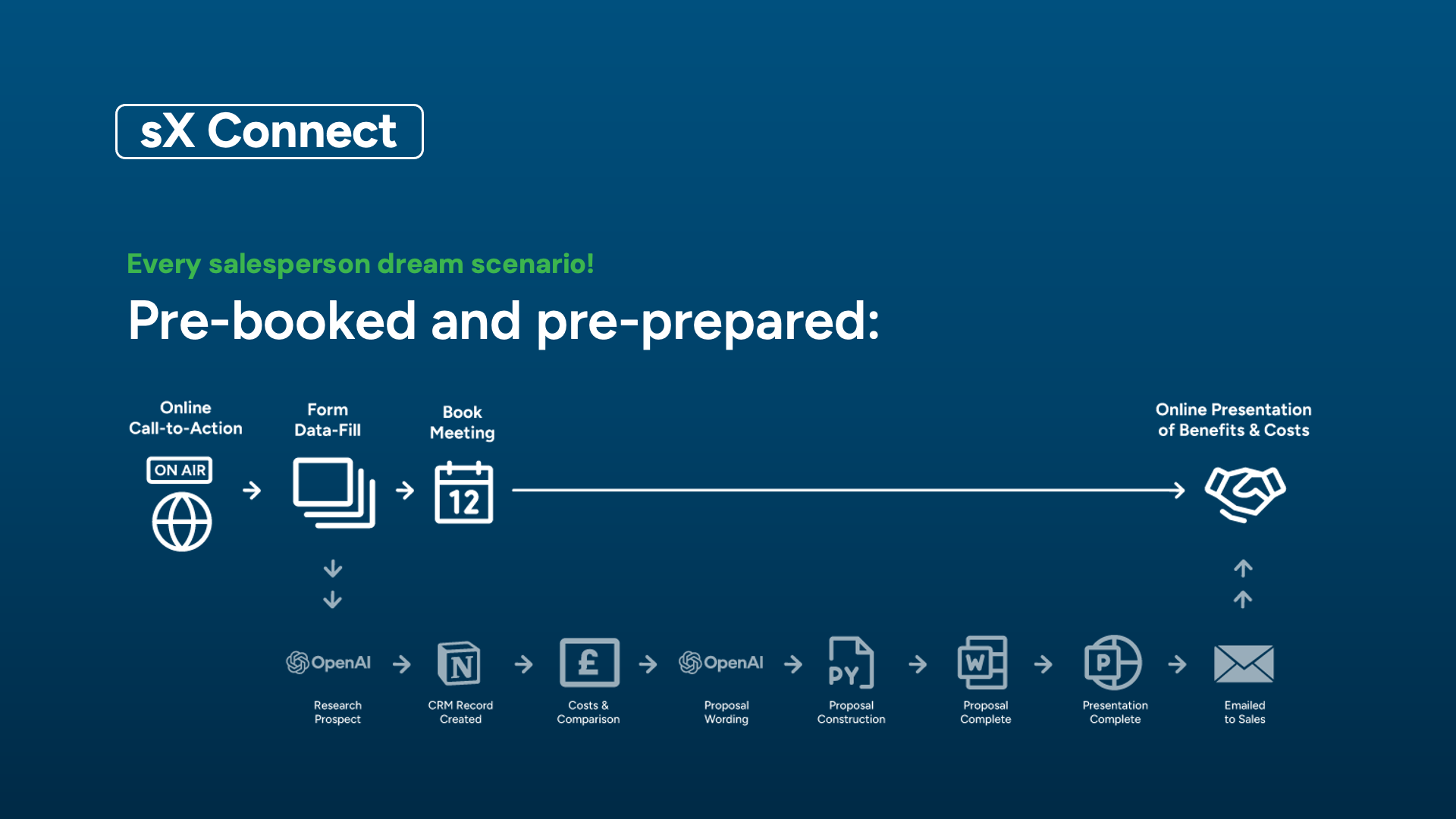
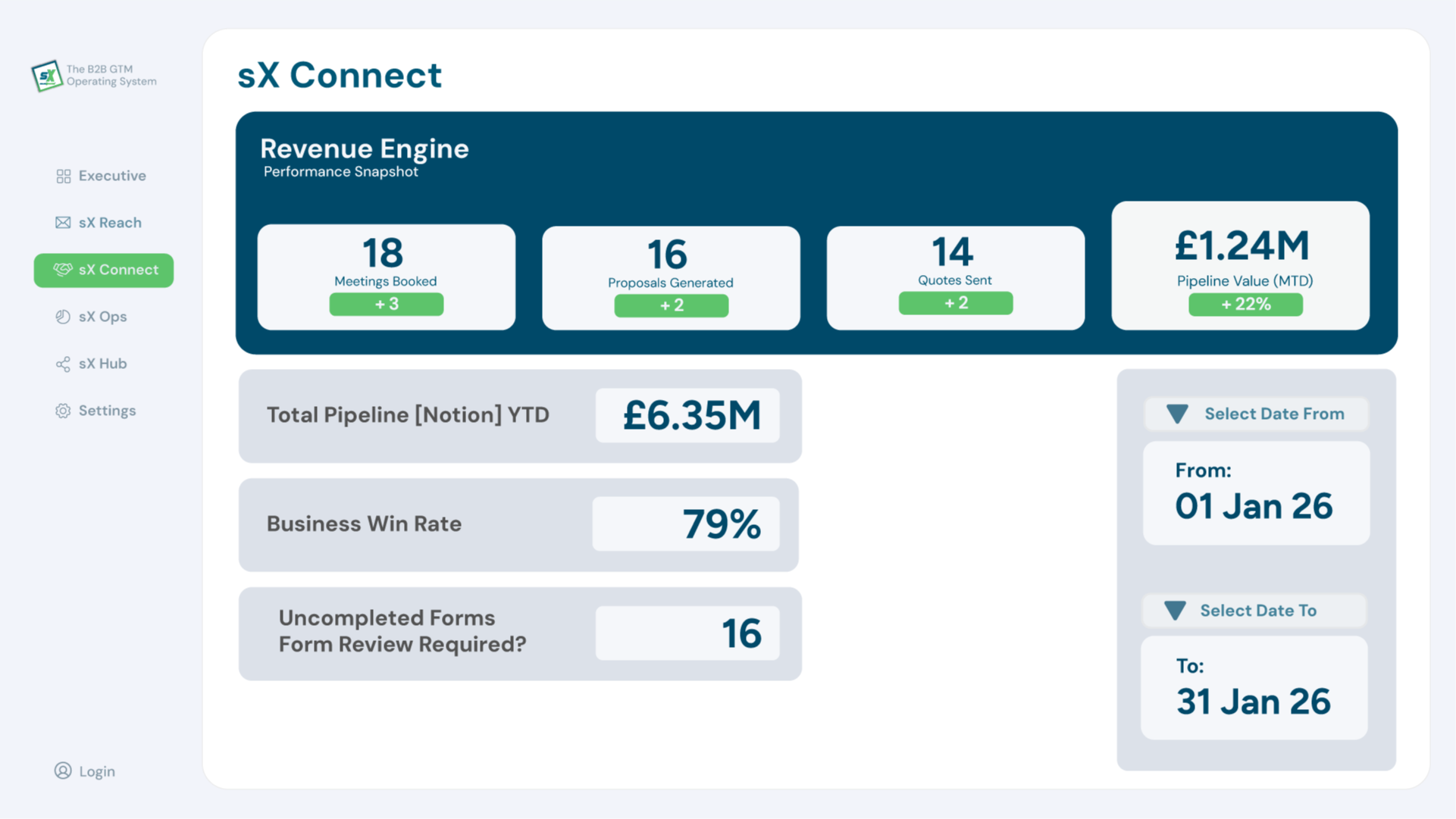
sX Connect supports the conversion layer.
It gives interested buyers a clear path from engagement to conversation, proposal, and commercial next step.
This is not about forcing people through forms before they are ready. It is about giving educated, informed buyers a structured route into the business when they decide to act.
The result is a more useful conversion process: less pressure, better timing, and more relevant conversations.
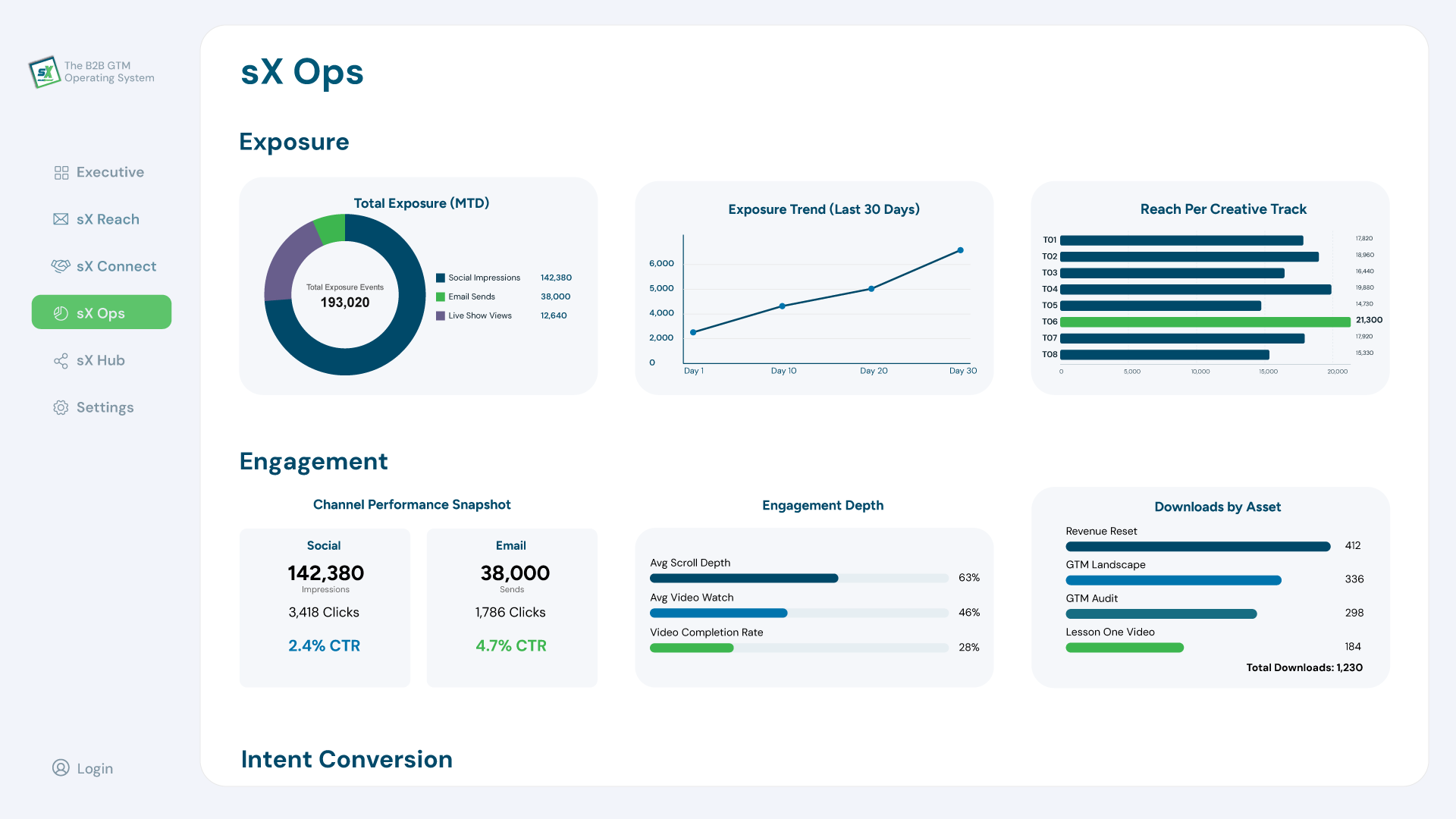
sX Ops
Operational control across GTM activity
sX Ops supports the management layer.
It helps coordinate campaigns, content, workflows, tasks, reporting, and execution across the GTM function.
This is where the system becomes operational rather than theoretical.
Without operational discipline, even a strong strategy collapses back into random acts of marketing. sX Ops gives the business a way to manage the work and keep it connected.
sX Hub
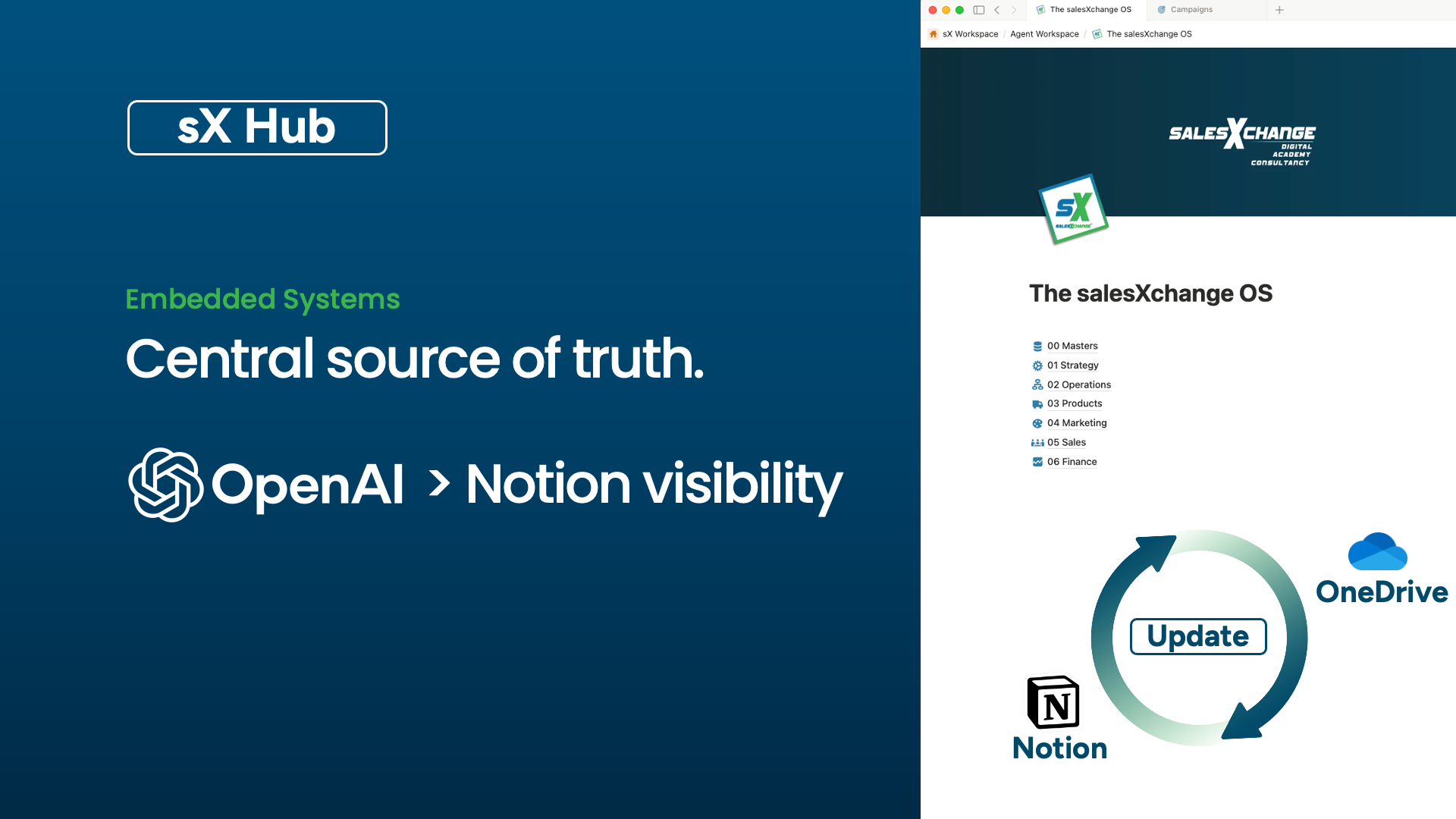
AI-supported knowledge, content, and workflow infrastructure
sX Hub supports the knowledge and automation layer.
It gives the business a central place to organise GTM knowledge, content assets, campaign logic, operating processes, and AI-supported workflows.
This matters because modern GTM execution creates a lot of moving parts. Content, scripts, emails, posts, videos, data, tasks, and decisions all need structure.
sX Hub helps keep the system aligned so teams are not rebuilding knowledge from scratch every time they act.
How the Components Work Together
Each component supports a different part of the new B2B model.
- sX Reach creates visibility
- sX Live builds authority
- sX Connect manages conversion
- sX Ops coordinates execution
- sX Hub organises knowledge and workflow
- sX Telemetry measures performance
On their own, these functions are useful.
Connected together, they become a B2B operating system.
That is the point of sX OS: not more disconnected tools, but a structured environment for running modern GTM.
From Components to Broadcast Layer
The Broadcast Layer is one of the most visible parts of sX OS because it shows the market what the business knows.
But it is not the whole operating system.
Broadcasting works best when it is connected to reach, content planning, conversion workflows, operations, and telemetry.
That is why the next page focuses on the Broadcast Layer in context: not as a studio project, but as part of the wider operating model.